


A while back, outside of Flagstaff, I spent nearly two hours creeping down a bumpy forest road. I was chasing a five-star site I found on a camping app. The reviews promised peace and epic views. What I found was a dirt lot filled with vans, barking dogs, and a half-burned mattress in the fire ring. Music echoed through the trees. I didn’t even put the van in park. I just kept driving.
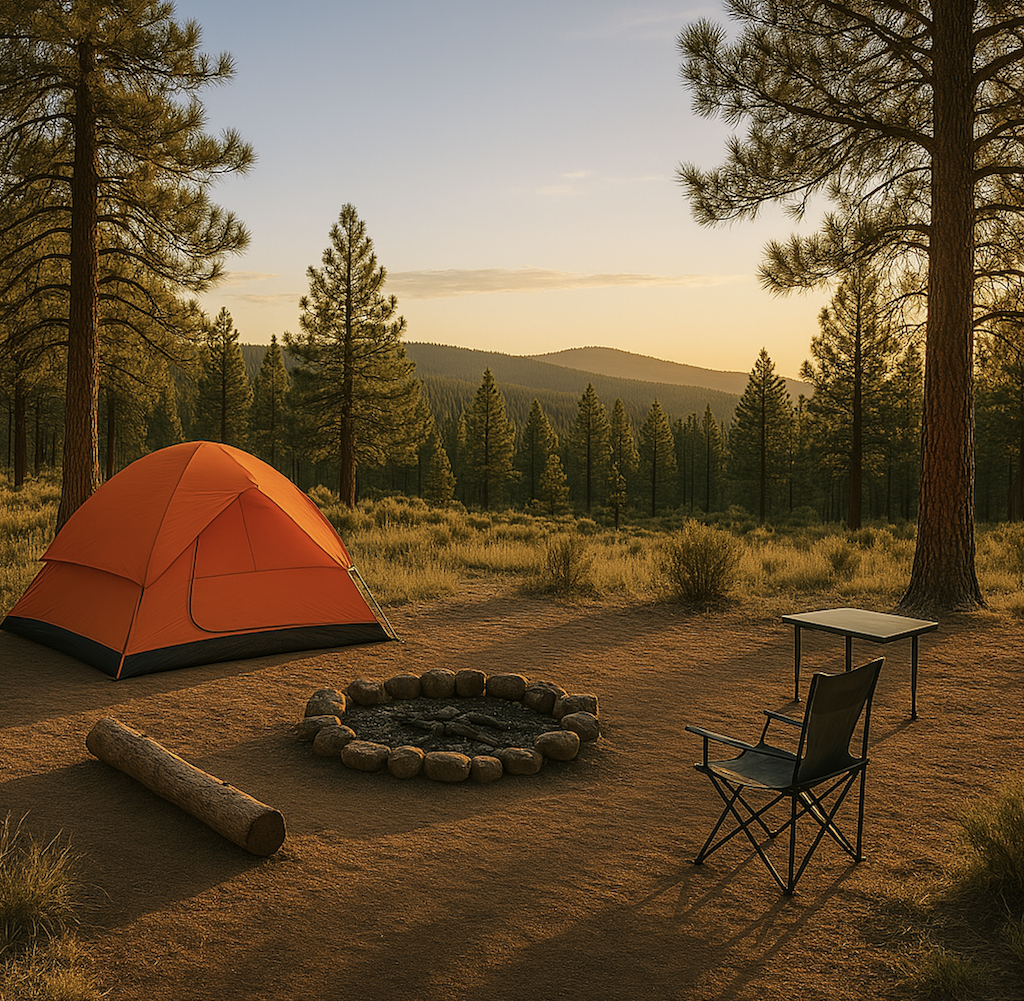
Twenty minutes later, I pulled into a tiny pullout in a grove of pines. It wasn’t marked on any map. No one else was there. It was flat, quiet, and full of birdsong. I stayed two nights. That spot didn’t have a name or a five-star rating, but it was everything I wanted.
That’s the thing about free camping. It can be amazing, but it takes a little strategy to find spots that feel wild, private, and legal. If you’re new to boondocking or just tired of ending up next to people running generators at midnight, here’s how I find campsites that actually feel like camping.
Know What You’re Looking For
“Free” doesn’t always mean “good.” A pullout off a highway might be legal, but it’s not exactly peaceful. Before you even start scouting, think about what kind of camping experience you’re after.
Do you need cell service to work or check in with family? Do you prefer open desert or shaded forest? Are you overnighting or planning to stay a few days? For me, a good site usually means privacy, sun for my solar setup, and somewhere I can make coffee outside in the morning without a generator humming in the background.
Once you know your own non-negotiables, you’ll be able to skip over a lot of mediocre options that don’t actually suit your style.
Understand the Land
If you’ve ever driven into a gorgeous canyon only to get kicked out by a rancher or a ranger, you know how confusing land access can be. The trick is learning how to spot what’s actually legal to camp on.
In the western US, Bureau of Land Management (BLM) areas and National Forests are your best bet for dispersed camping. BLM land tends to be wide open and dry. National Forests offer more shade and elevation. Both usually allow camping for up to 14 days in one spot.
State land is more complicated. In some states, you need a permit. In others, camping is banned altogether. And don’t assume something is public just because it looks remote. Private land often sits right next to public land with no clear markers. That’s where apps with land overlays really come in handy.
When I get to a new area, I take it slow and look for signs. If there’s a cleared pullout with a rock fire ring and no “no camping” signs, it’s usually a good sign. If there’s barbed wire or a gate, I keep moving.
Use Apps, But Trust Your Eyes
I use apps like FreeRoam, Gaia GPS, and Campendium, but I don’t let them make the decision for me. The best campsites I’ve found are almost never the ones with tons of five-star reviews. They’re the spots no one’s written about, because no one else has bothered to explore past the first fork in the road.
Here’s how I actually use my app stack:
- FreeRoam to get a general lay of the land and filter for cell coverage
- Gaia GPS with public land overlays to check what’s legal
- Google Satellite view to scout tree cover, clearings, and road quality
Sometimes I’ll find a promising spot and just drop a pin on satellite view. Then I’ll go see if it’s real. That’s how I’ve ended up with some of my favorite campsites. No reviews. No photos. Just a hunch and a dirt road.
Don’t Stop at the First Spot
Most people camp at the first decent-looking pullout they find. It’s easy. It’s flat. There’s a fire ring. Done. But if you’re willing to drive just a little further — even a mile or two — you’ll often find something way better.
I’ve had so many nights saved by going past the obvious sites. The first ones are usually packed, noisy, or full of trash. The next ones are smaller, quieter, and more peaceful. I’m not saying you should drive 30 miles into nowhere, but don’t settle for the first Instagram-famous site if what you want is actual quiet.
I’ve had better luck with the places nobody talks about.
Pay Attention to the Details
After a while, you start noticing the little things that separate a decent site from a great one. Flatness matters. So does drainage. If it rained last week and the ground is still soft, you could get stuck. A site that looks epic in the sun might turn into a wind tunnel at night.
I usually look for spots that get morning light, especially if I’m relying on solar. I also check for signs of overuse — broken glass, shotgun shells, burned logs that haven’t been cleaned up. That’s usually a red flag. If a site feels trashed, I don’t stay. Not because I can’t handle it, but because I don’t want to add to it.
If the vibes feel off, they probably are. Trust that instinct. There are plenty of other places to camp.
Leave It Better Than You Found It
I’ve said this before and I’ll keep saying it — free camping only stays free if we don’t screw it up.
That means packing out your trash. Don’t build new fire rings if there’s already one there. If there’s a fire ban, don’t light one anyway. And please, for the love of the outdoors, don’t blast music through Bluetooth speakers at your campsite. Nature already has a soundtrack. Use headphones.
Every time I leave a site, I try to make it look like I was never there. If we all did that, we’d have more places to come back to.
The Best Spot I Ever Found (And Why I’m Not Sharing It)
It was somewhere in Colorado. Mid-summer. I was driving away from a crowded lakeside area and took a random turn into the trees. The road wasn’t on any map. No reviews. No trail markers. Just a narrow clearing that opened up to a view of the valley. Total silence. I stayed five nights.
I’m not going to geotag it. Some places are better left unlisted.
But that kind of spot isn’t magic. You find it by being curious. By going a little further. By trusting your eyes more than your apps.
That’s the real trick to finding free campsites that don’t suck. You don’t just look. You learn how to look.
Want more tips for off-grid camping? Check out Camping Power for Beginners for everything I’ve learned about staying powered up without hookups.
And if you’ve got a favorite hidden gem, feel free to share your story in the comments. Just maybe leave the GPS coordinates out.


