If you rely on a CPAP machine to sleep, running it off-grid can feel like a logistical nightmare. Whether you’re camping for a weekend or living on the road full-time, you need a power setup that won’t let you down in the middle of the night.
In this guide, I’ll break down the best portable power stations for CPAP use based on hands-on testing, real runtime estimates, and power-saving tricks I’ve picked up from years of boondocking with friends who use CPAPs daily. We’ll cover important considerations like humidifier usage, inverter efficiency, DC vs AC power, and solar charging.
This isn’t a generic list. If a product doesn’t have enough juice to last a full night, I’ll call it out. Let’s get into it.
How Much Power Does a CPAP Machine Use?
CPAP machines generally draw between 30 and 70 watts while running, depending on the model and whether the humidifier or heated hose is on. Most people use their CPAPs for about 8 hours a night, which adds up to:
- 250 to 600 watt-hours per night
- AC power is less efficient than DC, especially if you’re using a standard wall plug instead of a 12V adapter
Basic runtime formula:
Runtime (hours) = (Battery Wh × 0.85) ÷ CPAP Wattage
The 0.85 multiplier accounts for inverter loss. If you use a DC-to-DC cable instead, you can stretch your runtime by 20 to 30 percent.
CPAP Runtime Comparison Table
| Power Station | Battery Capacity | Est. Runtime (AC, No Humidifier) | Est. Runtime (AC, With Humidifier) | Notes |
| Bluetti EB3A | 268Wh | 5 hours | 3.5 hours | Lightweight but short runtime |
| Jackery Explorer 500 | 518Wh | 9 hours | 6.5 hours | Solid for weekend use |
| EcoFlow River 2 Max | 512Wh | 9 hours | 6 hours | Compact, fast charging |
| EcoFlow Delta 2 | 1024Wh | 18 hours | 13 hours | Best balance of size vs power |
| Anker 757 PowerHouse | 1229Wh | 21 hours | 15 hours | Premium pick with long life |
What to Look For in a CPAP-Compatible Power Station
Before you buy, make sure your power station checks these boxes:
Battery capacity
At least 500Wh is recommended for a full night’s CPAP use. Go bigger if you plan to use a humidifier or power other gear.
Pure sine wave inverter
Some cheaper stations use modified sine wave inverters that can cause issues with medical equipment. Always confirm it’s pure sine wave.
12V DC output
If your CPAP model supports DC input, this can drastically reduce energy loss and boost your battery life.
Recharge options
Solar input and car charging are essential if you’re camping multiple nights. Look for MPPT charge controllers and fast AC recharge as a bonus.
Weight and portability
Tent campers may prefer lighter models, while vanlifers and RV travelers can handle heavier units.
Best Power Stations for CPAP Camping in 2025
Jackery Explorer 500 – The Sweet Spot for Most Campers

The Jackery 500 hits that “just right” zone for many weekend campers. At 518Wh, it has enough juice to run most CPAP machines overnight with some headroom. It’s simple to use, lightweight, and pairs well with Jackery’s solar panels.
I’ve tested this on a friend’s ResMed AirSense 10 (AC power, no humidifier), and it ran comfortably for about 9 hours with 20 percent left in the tank.
Use it if: You’re car camping or weekend tripping and want simple, reliable CPAP power.
EcoFlow Delta 2 – Best for Multi-Night Trips or Full-Time Travel
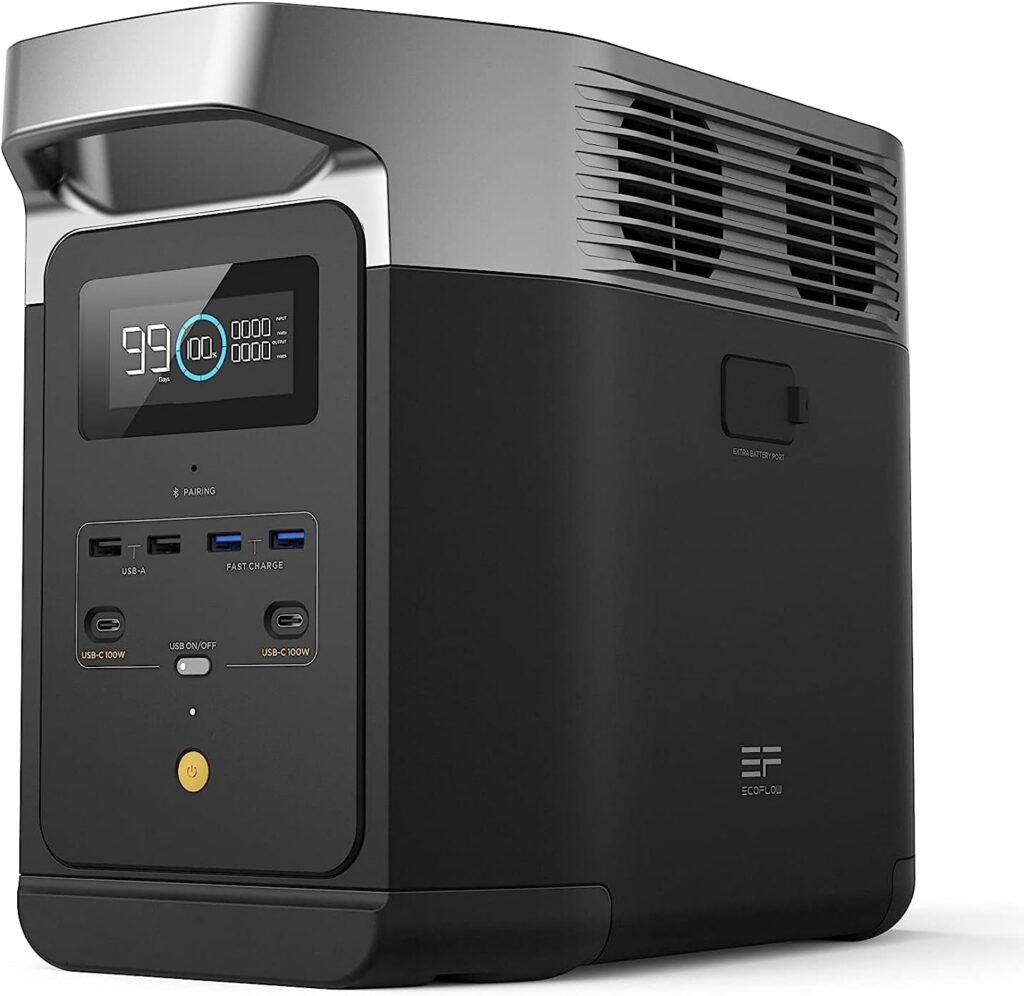
The Delta 2 is one of my favorite all-around batteries, period. With 1024Wh of capacity, lightning-fast charging, and app control, it handles CPAP use with ease — even if you’re also running a fridge, router, or lights.
It also supports DC output and has excellent solar compatibility with MPPT built in. Add the optional expansion battery, and you’ve got a 2000Wh+ setup for extended trips.
Use it if: You’re boondocking, traveling full-time, or need room to grow.
Anker 757 PowerHouse – Best for Durability and Long-Term Use

The 757 PowerHouse is built like a tank. It’s big, bold, and comes with a 5-year warranty, which is rare in this category. At 1229Wh, it can power a CPAP for multiple nights — even with the humidifier on.
I met a couple camping in the Sierra Nevadas who used this to run two CPAP machines at once for over 6 hours and still had juice left.
Use it if: You want long-term reliability or plan to power multiple devices with your CPAP.
EcoFlow River 2 Max – Best Lightweight CPAP Companion

If you’re looking for something more compact than the Delta 2 but more capable than the EB3A, the EcoFlow River 2 Max is a great in-between.
At 512Wh, it’ll power most CPAPs for a full night (without humidifier), and it recharges crazy fast — around 60 minutes from wall power. It also supports solar and has a regulated 12.6V DC output.
Use it if: You’re flying with your gear, packing light, or weekend camping with solar support.
Is the Bluetti EB3A a Good CPAP Option?
The Bluetti EB3A shows up in a lot of “best power station” lists — and on paper, it looks great. It has fast AC charging, solar input, a LiFePO4 battery, and a pure sine wave inverter. But let’s be real: for CPAP use, it’s borderline.
At 268 watt-hours, you’re looking at around 4 to 5 hours of runtime at best — and that’s without the humidifier. If you run your CPAP through the AC outlet with humidifier enabled, expect closer to 3 hours before it shuts off. That’s not a full night of sleep.
Here’s when the EB3A can work:
- You’re using a 12V DC cable for your CPAP (instead of AC)
- You’ve disabled the humidifier and heated hose
- You have access to solar or vehicle charging during the day
- You only need backup power for a short nap or emergency use
For most people, the EB3A is better as a backup battery than a primary overnight solution. If you’re serious about CPAP power, something in the 500Wh to 1000Wh range will be much more reliable.
If you’re looking for a next-step-up alternative, check out the EcoFlow River 2 Max — it’s only slightly larger, but offers nearly double the usable watt-hours and better recharge speeds.
Power-Saving Tips for CPAP Camping
- Turn off the humidifier and heated hose. These double or triple power draw.
- Use a DC cable for your specific machine model (ResMed, Philips, etc.).
- Pre-cool your machine before switching to battery power, if supported.
- Recharge during the day with a solar panel or car outlet.
- Avoid extension cords or inverters with poor efficiency.
Final Thoughts: Which Power Station Should You Choose?
If you only camp occasionally, a 500Wh unit like the Jackery 500 or EcoFlow River 2 Max will cover your needs — especially if you keep power use lean. But if you’re off-grid for multiple nights or want backup power you can trust, look at the Delta 2 or Anker 757.
The Bluetti EB3A might be tempting for the price, but for CPAP use, it’s a tight squeeze unless you optimize everything. It’s best as a secondary or emergency battery — not your main overnight solution.
Still not sure what size is right for you? Check out my Camping Power Station Sizing Guide or reach out, I’m always down to help fellow travelers build smart, off-grid setups that actually work in the wild.